Curly Dock
A deliciously raw tart green if you can find it young. A delicious cooked green in spring and fall.
Family: Polygonaceae
Species: Rumex crispus
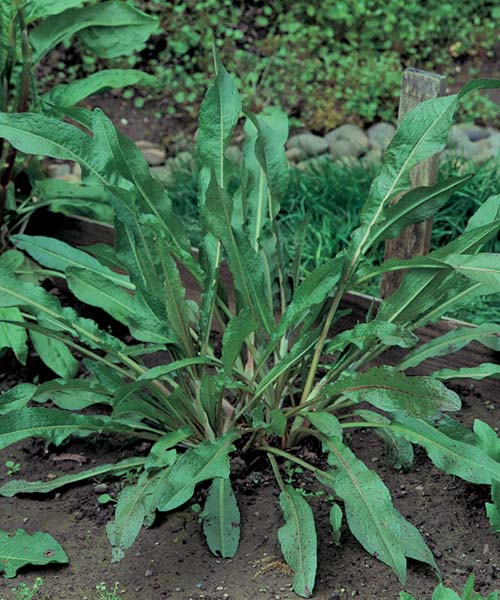
Spring curly dock growing multiple stems from a single large taproot. Some leaves have curled or wavy margins, others do not.
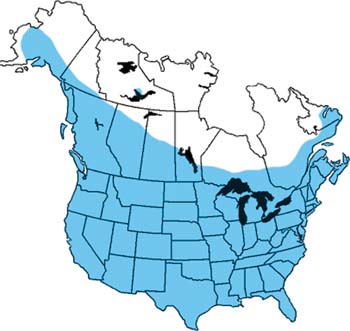
Estimated Range
Official Species Name:
-
Rumex crispus L.
Synonyms (Historical Names):
-
Rumex elongatus Guss.
Common Names:
-
Curly dock
-
Curley dock
-
Curled dock
-
Yellow dock
-
Narrowleaf dock
-
Sour dock
An herbaceous perennial naturalized from Southern Europe and Western Asia, curly dock is widespread and abundant in North America, primarily where humans have invaded and where soil has been disturbed.
Edible Parts:
-
Leaf blades
-
Growing tips of leafy stems
-
Seeds
Most of you will find curly dock when it is a mature plant, either as a cluster of leaves growing from a previous year’s root or as a stalked plant. At the stalk stage, it is often towering over grasses and other weeds it is growing within. By the time most people taste the leaves, it seems papery, often astringent, and sometimes bitter. If you have had this experience, it is time to take a new look at curly dock. As with many other plants, good flavor and texture are in the details.
Curly dock and broad-leaved dock (also covered in this chapter) are widely eaten in the old world, particularly broad-leaved dock. The reason I focus on curly dock is that I find its leaves more flavorful for more of its growing season than broad-leaved dock. Both have the same food uses.
The name crispus is Latin for “curled, curved, or wavy.” This describes the sides or margins of the mature leaves of curly dock.
Curly dock leaves are high in beta-carotene, vitamin C, and zinc. Broad-leaved dock is high in zinc but just about average in other nutrients.
Curly dock seeds are rich in calcium and fiber while low in protein and fat. The limiting amino acid is lycine. (Wiese, 1995.)
Curly dock is rich in phenols, with greater amounts in the seeds than in the leaves. Broad-leaved dock leaves are rich in the flavonoids quercetin and myricetin. They have about twice as much myricetin as broad beans or onions, six times that of red wine, and about eighteen times that of black tea. They have more than twice as much quercetin as onions, about thirty times as much as broad beans, and a hundred times that of red wine or black tea. (Trichopoulou, 2000b; Wiese, 1995; Yıldırım, 2001.) Both are probably high in these phenols, flavonoids, and other phytonutrients, but more research needs to be done to verify this.
Every plant in this section contains soluble oxalates, which are relatively harmless in foods. Eat a wide variety of greens and a wide variety of foods, in general, and the benefits of these greens will far outweigh the small temporary loss of some minerals that oxalates may bind.
Curly dock seeds and vegetation are toxic in quantity to poultry (Royer, 1999). Humans are not affected. We have a different physiology and a more diverse diet than chickens.
Knowing Curly Dock
Curly dock grows readily from seed in the warm part of late spring and early summer. I have not found it germinating in cold spring and fall conditions. That doesn’t mean it doesn’t germinate at those times of year; I just haven’t seen it happening. Germination, of course, depends on the amount of moisture, the softness of the soil, the proximity of the seed to the surface, and sunlight. Turned or disturbed soil brings some seeds to the surface and softens the soil. The seedlings start out with long narrow cotyledons (two developmental leaf-like organs) on long stems. The leaves that follow are more rounded than the cotyledons.
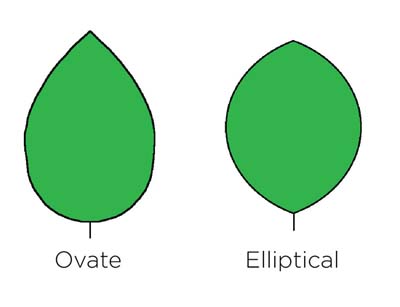
As leaves continue to develop from a growing taproot, the cotyledons wilt away. New leaves begin egg-shaped (ovate) and elliptical, without wavy margins. As more develop, you see them gaining more length, and the margins show more and more curviness.
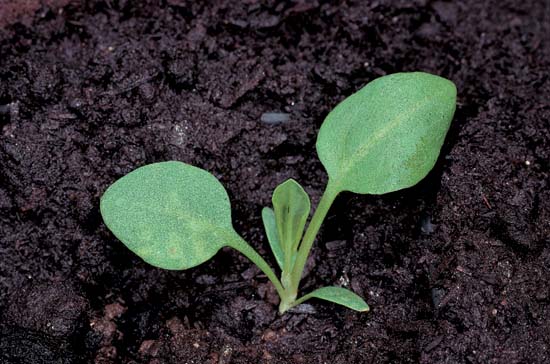
First few leaves of curly dock after the cotyledons have wilted away. From leaf tip to leaf tip, this plant is 2 inches wide.
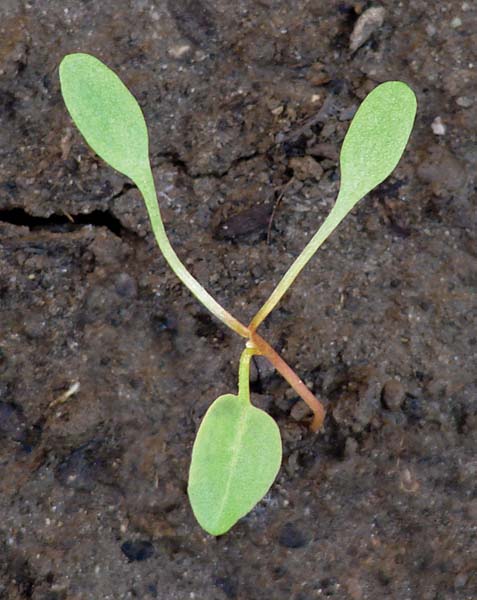
Curly dock seedling. This shows the two cotyledons (top) that emerged from the seed, with the first true leaf growing towards the bottom of the photograph.
There comes a point where the leaves start multiplying and radiating out from the taproot. Like thousands of other plants, including many in this book, a basal rosette is formed. Unfortunately for many people, different species look the same when they are at their basal rosette stage. To help you distinguish, look for a variety of leaf shapes. These shapes tend to look like a wavy serving spoon with a long handle. The spoon part is sort of roundish for some of the leaves. For others, the spoon part starts to elongate. Some leaves are more curly around the edges than others.
First-year plants (ones growing from seedlings) and early second-year plants tend to have rounder leaf blades in their early basal rosettes than older plants. If conditions are right, lots of leaves will develop. Then, at some point in late spring, something stimulates the plant to bolt (produce a stalk). Once a stalk has developed, the plant starts orienting toward reproduction—the development of flowers and eventually seeds.
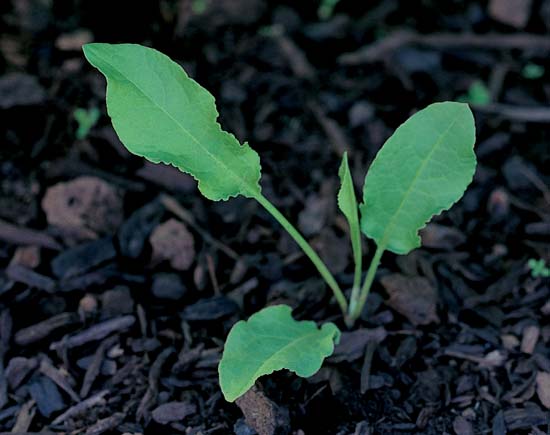
Curly dock leaves expanding outward from the taproot. These leaves are just beginning to show more waviness along the margins.
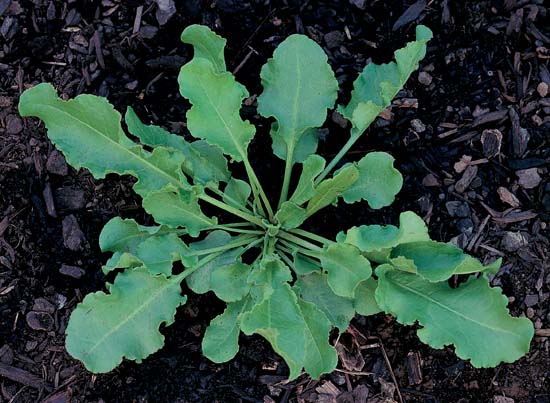
A young, first-year curly dock plant with rounded to elongated leaves coming off the long leaf stems. Basal leaves, particularly of a first-year plant, tend to have less wavy margins than stalked or older leaves. This is the prime stage to gather the leaves of this plant.
Older plants tend to produce long narrow leaves in the spring. Older plants typically skip the rounded leaf blade phase of their youth. You can often spot an older plant by seeing last year’s stalk, now dark brown and dried up—usually only a stub sticking one to eight inches up from the root. Another way to identify an older plant is by seeing multiple stems arising from the same taproot. Older plants tend to produce lots of larger leaves much earlier in the spring before they bolt. They can do this because they are living off the stored energy of a large well-developed root.
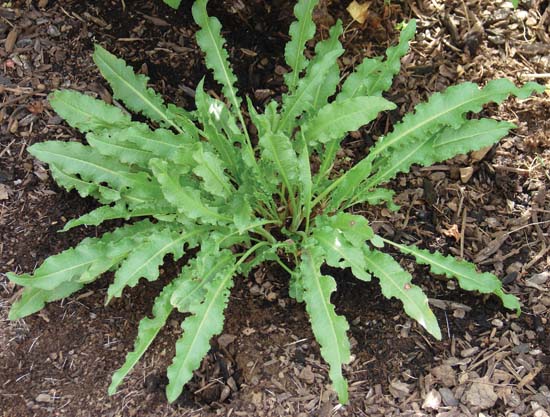
This is a second- or third-year plant whose root is large enough to sprout several stems. At the base of these leaves are what looks like several different plants arising from the ground. In fact, all those stems arise from the same root. The leaves are exceptionally curly here.
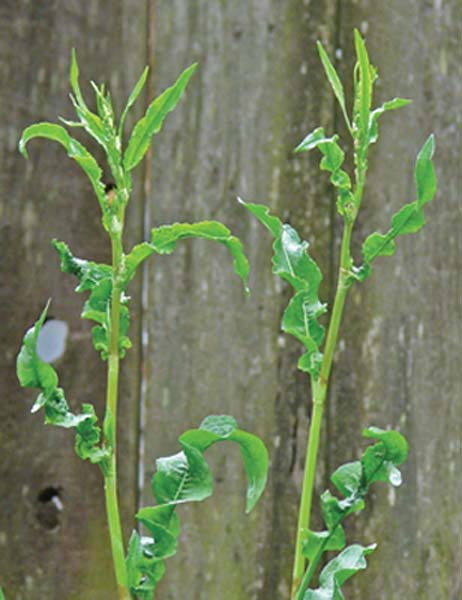
Curly dock stems. Here we see two of about six stems growing from the same root. Some were cut away to more clearly display the remaining two. This shows young stems prior to flowering. Some tiny flower buds are just forming at the tops. These plants are about one yard tall with the upper 20 inches of the tops showing.
Because nature is not here for our convenience, curly dock leaf shape varies quite a bit. They range from rounded or spoon-like shapes of the newly formed plant, to small narrow leaves at the top of a stem, to the classic long wavy curly dock leaf. Some are flat and some have curled edges. Leaf stems (petioles) become shorter the higher up they are on the stem. The key is to recognize the plant by its overall characteristics.
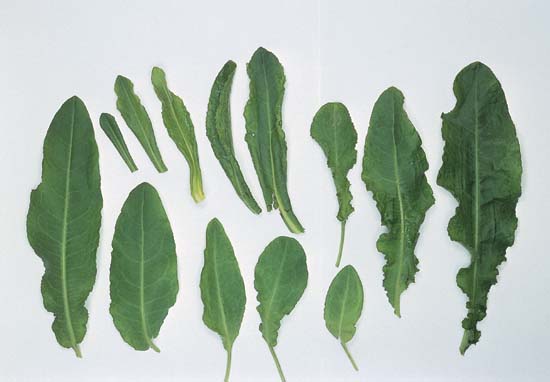
The wide leaf variation you will find on curly dock. The five leaves on the upper left are new stem leaves growing at the top of the plant. The remaining leaves all had their long leaf stems trimmed off to neatly fit in the photograph. The three to the right are the more typical stem leaves. The five lower-left leaves are what can be found on first-year or early second-year basal rosettes prior to bolting.
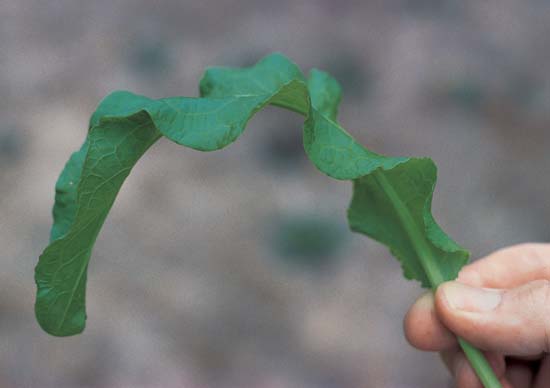
The classic mature curly dock leaf. These leaves are long, narrow, and wavy-margined.
One of the characteristics that distinguishes all members of the Rumex genus (docks and sheep sorrel of this section) is a thin delicate membranous sheath called an ocrea. It wraps around the nodes of the stem where leaves emerge. Ocrea becomes progressively smaller the higher you find them on the flowering stalk. It is one of the first parts of the plant to dry up and turn brown as the plant ages.
Once curly dock is developing a stem, the plant matures quickly. As the main stem elongates, flower stems arise. This development (as well as when the plant is turning brown) are the stages when most people can easily recognize curly dock.
At first, small whorls of bud clusters develop. Segments of stem can be seen separating each cluster. These buds and the flowers they produce are small and inconspicuous.
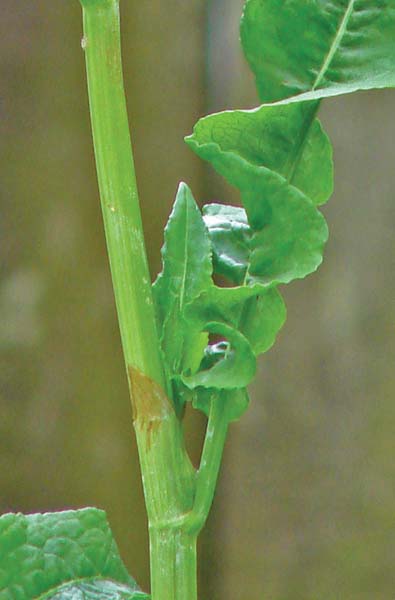
Ocrea on a young, newly forming stalk of broad-leaved dock (Rumex obtucifolius). Note the ocrea surrounding the base of the leaf arching to the left, also the ocrea surrounding the base of the newly forming stem that the arching leaf is emerging from. Ocrea can be seen around two other emerging stems as well as several torn, shriveling brown ocrea at the base of the plant.
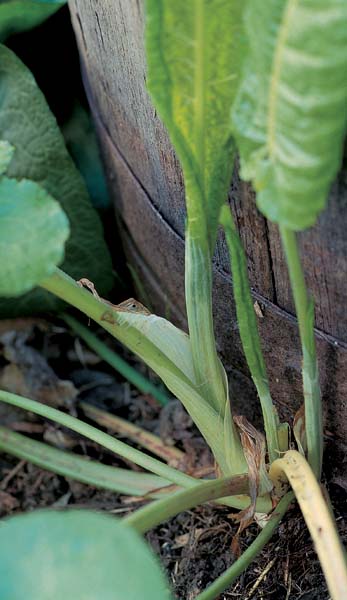
Curly dock ocrea on a main stem leaf. On the upper stem, the ocrea are smaller and more tight fitting around the stem and leaf base. Note the collar-like enlargement where the leaf meets the stem. This collar is also characteristic of the Rumex genus. The ocrea here starts at that collar and travels up the stem. This ocrea’s tip has already turned brown.
As the fruits mature, they turn a dark rust brown. In fact, the whole plant turns brown. Each dry fruit encases one seed. The fruit’s three sides are formed by the membranous remnants of the flower’s sepals. Each of the sides is topped by a non-seed structure called a tubercle. When I first started processing curly dock seeds, I thought the tubercles were the outer bulge of the seed. In fact, tubercles surround the seed like three pillows surrounding your head. The tubercles add size to the fruit, making the seeds look bigger than they are.
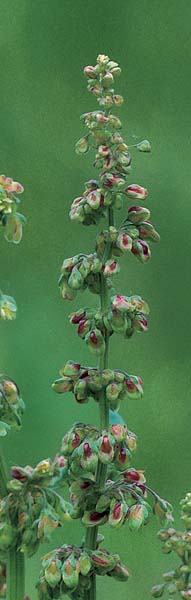
Bud clusters of a flowering branch.
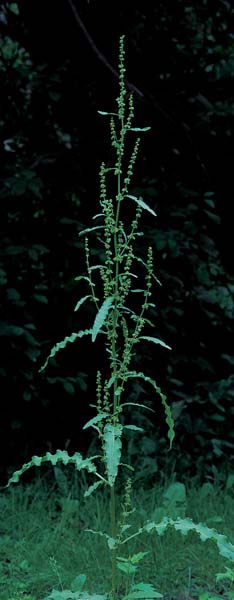
A maturing curly dock plant with leaves and fruiting stems.
Curly dock fruit differs from broad-leaved dock in that its membranous wings have relatively smooth margins. Broad-leaved dock’s margins flare and point outward. Look ahead to see how curly dock fruit structure compares to that of broad-leaved dock.
Curly dock has a large fleshy to woody taproot that is yellowish to orange in color.
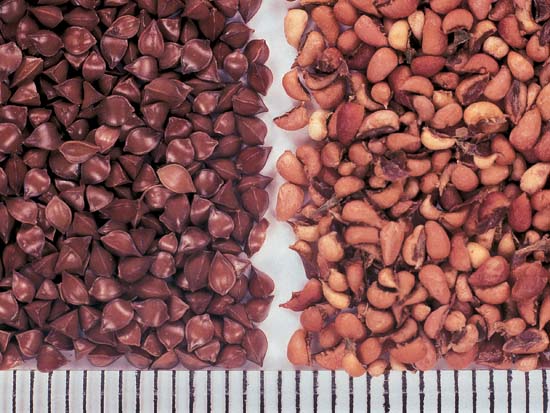
Curly dock seeds and tubercles compared. Curly dock seeds (left) are brown, shiny, and three-sided. Tubercles (right) are non-reproductive seed-like structures that surround the seeds. Tubercles remind me of tiny cashews, only with the flavor and texture of a rice cake. I have no idea if they have any nutritional value. To show scale, those are 1mm increments at the bottom of the photograph. Broad-leaved dock seeds and tubercles have a similar appearance.
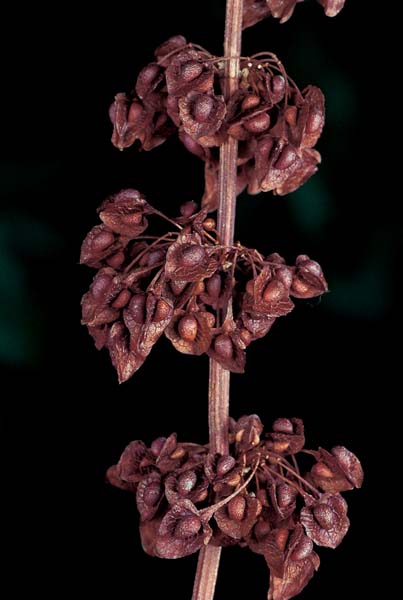
Whorls of mature curly dock fruits.
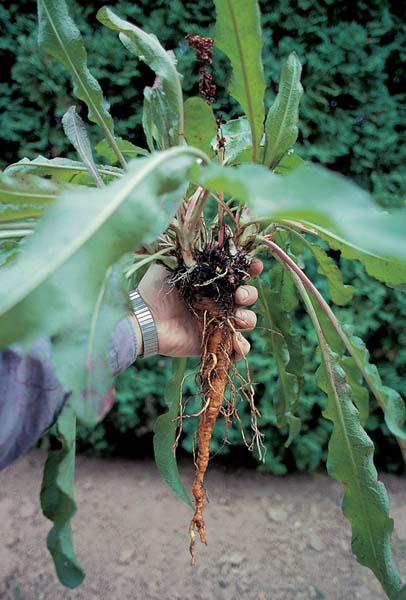
Curly dock’s taproot—possibly from a third-year plant. Note the multiple stems arising from this one taproot.
Broad-Leaved Dock
Edible brother to curly dock
Family: Polygonaceae
Species: Rumex obtusifolius
Estimated Range
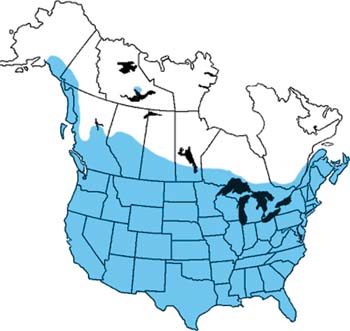
Official Species Name:
-
Rumex obtusifolius L.
Synonyms (Historical Names):
-
Acetosa oblongifolia (L.) A. & D. Löve
Common Names:
-
Broad-leaved dock
-
Broad-leaf dock
-
Bitter dock
-
Blunt-leaved dock
An herbaceous perennial naturalized from Southern Europe and Western Asia, broad-leaved dock is widespread and abundant in North America, primarily where humans have invaded and where soil has been disturbed.
Edible Parts:
-
Leaf blades
-
Growing tips of leafy stems
-
Seeds
Broad-leaved dock parallels the growing habits of curly dock and can be used in many of the same ways. It is more widely used than curly dock around the world. Its seeds and cotyledons (embrionic leaves) look similar, but its true leaves differ almost from the start. The first true leaves of curly dock and broad-leaved dock are similarly egg-shaped. After that, broad-leaved dock’s leaves start taking on an arrowhead shape. They remain different from curly dock leaves from that point on.
Once the plant is established and the leaves enlarge, they elongate to a more elliptical shape. The tips can be mildly pointed to rounded. The base lobes are rounded.
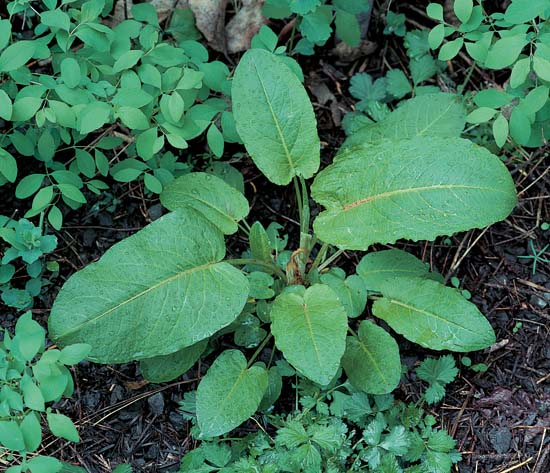
Broad-leaved dock prior to stalk development.
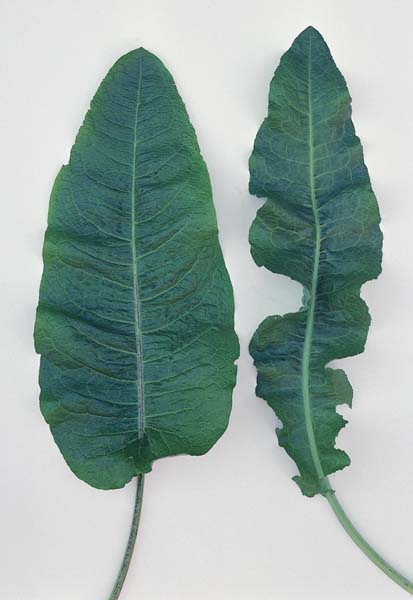
Mature curly dock and broad-leaved dock leaves compared. Curly dock leaves are typically over three times longer than they are wide. In contrast, mature broad-leaved dock leaves are typically less than three times as long as they are wide. Broad-leaved dock’s margins are flatter than curly dock margins.
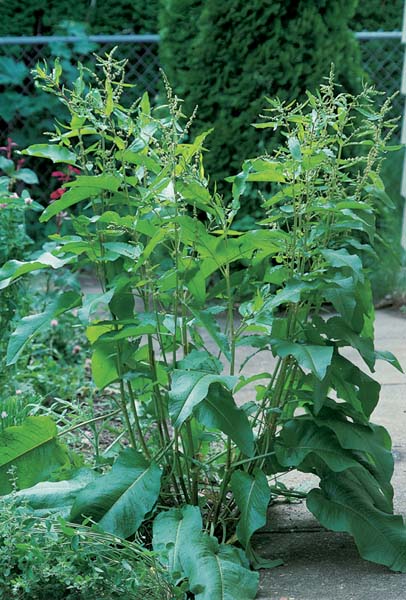
Mature broad-leaved dock in the flower bud stage.
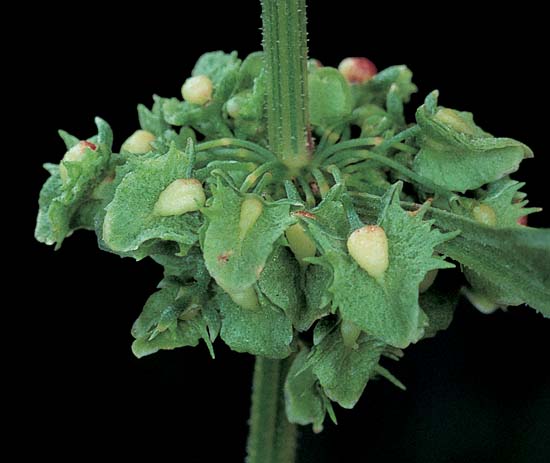
A whorl of broad-leaf dock fruits. The flaring pointed edges of the green sepals make these fruits different from curly dock. Once mature, these fruits will turn a rusty dark-brown color, just like curly dock. The brown three-sided seed bound inside each fruit is nearly identical to that of curly dock. The light seed-looking round objects are the tubercles resting on top of and covering the hidden seeds.
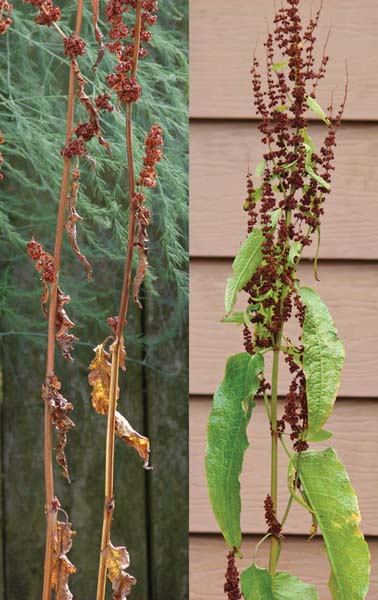
Curly dock seeds remain on the stem longer then broad-leaf dock seeds. Late in the season, around the first of September, even though this curly dock plant (left) has died, it holds on to its seeds, while broad-leaved dock (right) under the same growing conditions has dropped most of its upper seeds.
Harvesting Curly Dock
Leaves: For eating, curly dock leaves come in three qualities. The first is good for eating raw or boiled; the second, in my opinion, is only good boiled; the third is good for compost.
-
Quality 1
The very best leaves that curly dock produces are the first- or second-year basal rosette of leaves, before the stalk develops. These leaves are somewhat rounder than at any other time in the plant’s life. They are also more tender and have a lemony flavor. These are good raw, steamed, or boiled.
-
Quality 2
Beyond the young basal rosette stage, things get less predictable and downright frustrating. Almost as good though tougher are the rapidly growing leaves of the stem. Good raw flavor has a lot to do with the amount of recent and prolonged rain, cooler temperatures, new leaf growth, and some unknown variables. Even if all the conditions are right, the leaves can still be bitter, astringent, and papery. In the end, you have to taste the leaves to know if they are lemony enough to use raw or need to be cooked. As long as you boil them, rapidly growing leaves are usable even if they are unpalatable raw.
-
Quality 3
End size caused by hot dry weather and strong prolonged sun can turn curly dock leaves into paper—dry, tough, astringent, and bitter. They may look fine, but weather conditions change them. Even if you boil these leaves, they do not improve enough in flavor to make them worth eating.
The problem here is that Quality 2 (those that improve upon boiling) and Quality 3 (those that don’t) are mostly indistinguishable in the raw form. And since weather patterns are variable, your job is not easy. Just keep in mind, a well-hydrated plant that has healthy great-looking leaves is more likely to have leaves that cook into greatness.
Finding curly dock
Young plants often go unnoticed in early summer because they grow low to the ground and can look like a hundred other low-growing basal rosette–style plants. They are often hidden amidst tall grass. The key is to look for basal rosettes or dead stems of last year’s plants in the undergrowth. If the seed drops in tilled soil, you are in luck; there they grow in the open.
Choosing leaves
No matter the age of the plant, young, healthy-looking leaves are best. Do not be dismayed when you see reddish spots on the leaves. Wherever a bruise occurs, a reddish coloration results from the high acid content of the leaves. Young healthy leaves spotted with these discolorations are still fine to eat. These spots will not affect the appearance or flavor of cooked greens. They will affect the appearance of raw greens, if that matters to you or your guests. Old, reddish, partially shrivelled leaves are not good to eat.
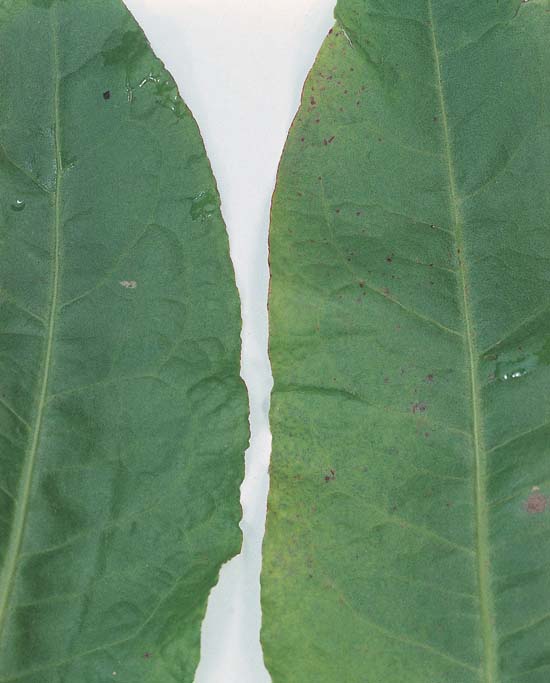
Curly dock leaf damage. The leaf on the left is undamaged. The leaf on the right is damaged slightly but not enough to cause me to discard this leaf.
Transporting leaves and stems
Collect leaves with their leaf stems (petioles) and keep them well hydrated, out of the sun, and in a plastic bag so they’ll stay fresh. Somewhat wilted curly dock leaves will crisp back up if you recut the stem and soak them in cold water. But it is better not to let them wilt in the first place.
The upper rapidly growing tips of curly dock can be eaten as a cooked green if gathered prior to the formation of flower buds. Only a few inches of tender material exists at the top of the otherwise stringy stem. A shorter, stouter, rapidly growing stem will produce more food than one that has elongated.
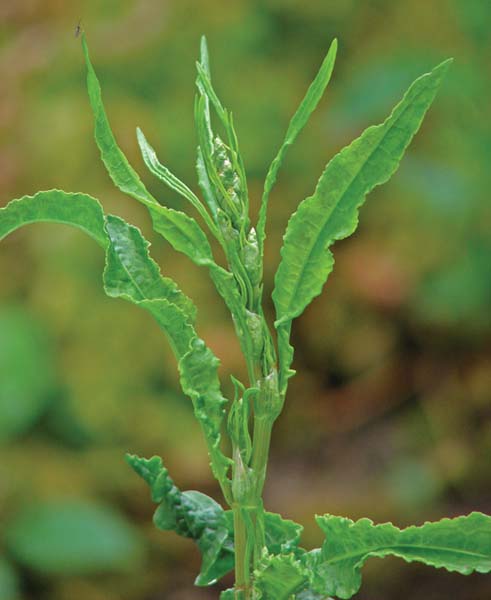
A growth tip of a curly dock stem. This tip is no longer edible because the early formation of buds can be seen. The emergence of buds indicates the onset of fibrousness.
Seeds
Seed development is complete when the fruit (dry fruit, in this case) turns a rusty brown color. Gathering the dry fruits is easy—just hold the stem and squeegee, or strip, the seed stems of their fruits, which can be used as seed for planting or can be separated from the chaff and used as a grain. Since the seeds are already dry on the plant, there is no need to dry them further. If they are not totally dry, dry them before storing or processing.
Curly dock seeds have great potential. Each plant produces thousands of seeds. And since the dry fruiting bodies stay on the plant when mature, they are easy to harvest. I have started some experiments to remove the chaff (sepal remains and tubercles) but have not yet found a reasonably efficient way to clean them in quantity. For those of you who love sprouts, the seeds easily germinate in warm conditions.
Preparing and Serving Curly Dock
Curly dock leaf stems are tough and stringy, and unless you are working with the very tender, young, first-year leaves, even the leaf blades will be somewhat tough. To get around the toughness, cut off the leaf stem (petiole). Attempting to eat the stem will result in a big spitball, which resembles a hair ball, so your cat will never look at you the same way again.
Even the main vein that extends from the leaf stem to the tip of the leaf blade is often substantial and tough. So if you want to use the stem leaves raw, first make sure the lemony flavor is there, then squeegee the leaf blade from the leaf stem and the main vein.
Do not squeegee the leaf blades until you are ready to use them. Once squeegeed, chop them into bite-size pieces and place them immediately in cold water. This crisps them and prevents discoloration along the edges. After a couple of minutes, drain, spin, and place them where you want them—in a salad, in a sandwich, or wherever.
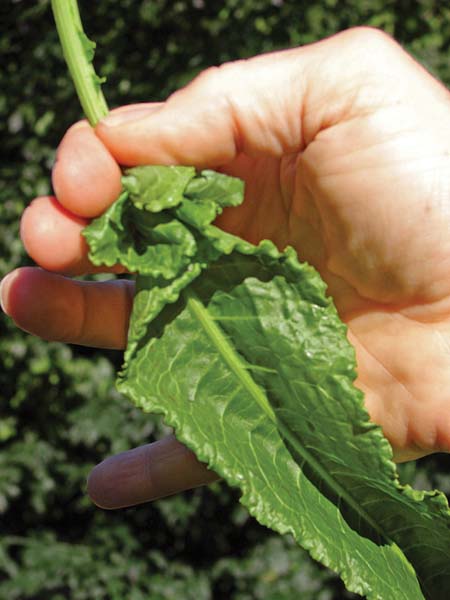
How to squeegee a leaf blade from its main vein. Hold the leaf stem with one hand. With the other hand, grab the base of the leaf blade on either side of where it is attached to the leaf stem and pull down along the main vein. With practice, most of the leaf blade will separate from main vein.
With a little experimenting, you will come to know how much chewiness suits you. The more tender you want the leaves, the smaller pieces you will want to use.
As a salad ingredient, curly dock provides a wonderful tart punch and can make up anywhere from one-fourth to one-half the content of a salad, depending on how much sour you desire. This green can take the place of a vinegar dressing if enough of it is included. Curly dock also goes well in sandwiches, as a component of fruit salads, and anywhere you use lettuce.
Most of the curly dock I’ve eaten has been cooked, due to the fact that most of the time I find it, it is astringent and sometimes bitter. Cooking, primarily boiling, for a few minutes transforms the tart raw flavor (or astringent flavor) to a wonderful blend of cooked greens with lemoniness. The texture goes from crisp (or papery) to smooth and creamy. There is a concentration of flavor as the greens reduce to about one-fourth to one-fifth their original size. Once boiled, the natural plant acids that give this plant its sour flavor cause an overall color change. The greens go from a bright green to a dull army green.
All of these characteristics provide a rich source for new recipes—new tastes, new textures, and new colors. As a side dish, the boiled greens can be eaten with a pinch of salt and pepper or served with your favorite salad dressings. The wonderful lemony flavor and creamy texture make a great addition to soups, stews, and sauces. And due to the concentrated flavor, you do not need a huge amount of the leaves to add interesting complexity to combination dishes.
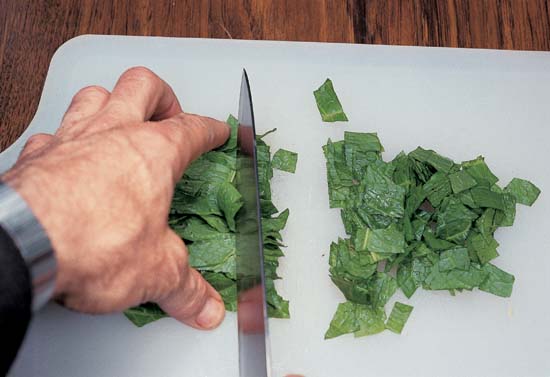
Managing leaf blade chewiness. If curly dock or broad-leaved dock leaves are papery and tough, chopping them into small pieces can reduce or eliminate the perception of chewiness. These pieces can be sprinkled in a salad if they pass the raw taste test, or they can be used for cooking.
Curly dock leaves can also be sautéed or stir-fried just until the color changes. Cooked like this, it is just as good as it is boiled—a creamy texture, a good lemony flavor with no astringency or bitterness, and some character added by the cooking oil.
Steaming does not work so well for me because it results in greens that are not so creamy, the lemoniness is almost gone, and a mild rankness replaces the original astringent and bitter flavors. So I prefer boiled or sautéed greens.
The higher the concentration of curly dock used in a salad or cooked dish, the more of that roughness you will feel on your teeth when the oxalates temporarily bind with the calcium of your teeth. It is fun to feel this roughness for a minute and to watch others feel the unique sensation the oxalates provide before they dissolve.
Up until now, we have been discarding the leaf stem and the thick main veins. But, like rhubarb, the strongest sour flavors are often found there. While I typically toss them, a potential is there in spite of their fibrousness. My friend Stew Meyers once finely chopped the upper stems of curly dock and cooked them into a rhubarb-like pie. He modified the recipe for Japanese knotweed pie from Stalking the Wild Asparagus by Euell Gibbons.
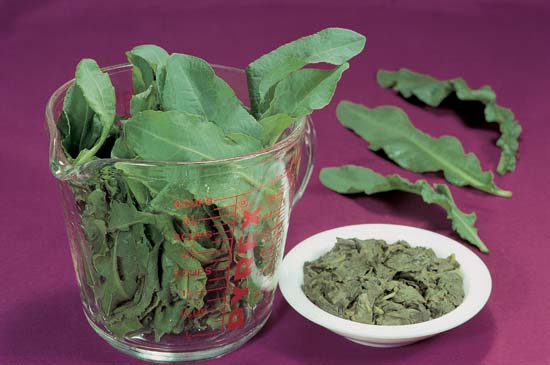
Curly and broad-leaved dock leaves shrink upon cooking. More than 2 cups of finely chopped (1/2 inch) greens boils down to less than 1/2 cup of greens, so volume reduces to less than 1/4 of its original size. Boiling also changes the color from bright green to olive or army green.
Curly Dock Pie Filling
Adapted from Euell Gibbons’ Japanese Knotweed Pie Recipe by Stewart Meyers of Eugene, Oregon.
Ingredients:
| 1-1/2 cups sugar |
| 1/4 cup flour |
| 3/4 teaspoon nutmeg |
| 4 cups very finely chopped curly dock upper stalks and petioles |
| 3 eggs, beaten |
Directions:
Preheat oven to 400 degrees F.
Blend dry ingredients together and gradually beat the eggs into the dry mix. Stir in the curly dock until well mixed.
Pour this filling into a prepared pie crust. Top with a top layer of pie crust and poke holes in the top for steam to escape.
Bake for about 50 minutes. Cool before serving
Using the stem tips and leaf refuse (leaf stems and main veins) are one way to get more use out of this plant. This is more than most people will do. But if you are so inclined, these parts can also be used for soup stock, dried for tea, or put through a juicer. However you decide to use them, you must account for their fibrousness. For instance, for soup stock, cook them, then strain the liquid to remove the fibrous stems. Of course, no straining is necessary if you use finely chopped leaf blades for soup stock.
My success with whole stem tips has been mixed. Sometimes the tips have good flavor and sometimes they don’t. This is a potentially promising area that needs more study.
Mature stems are hollow except for the joints where leaves emerge, so parts of the stem can be used as a straw for drinking beverages.
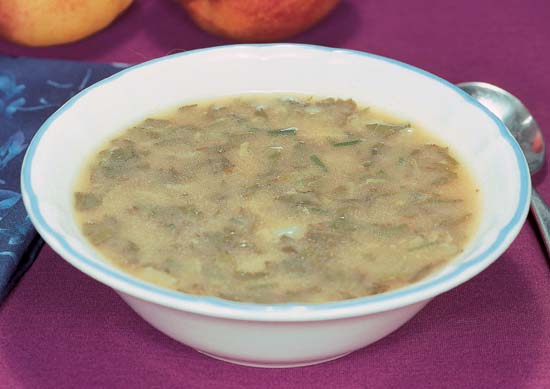
Curly Dock Soup
The flavor and texture of this soup are superb. I find it lemony, creamy, and delicious. Experiment. Change the ingredients to suit your tastes. Add more curly dock, add some mallow in place of starch, use broccoli instead of celery, or add sautéed onions. The possibilities are endless. Serves 6.
Ingredients:
| 4 tablespoons extra virgin olive oil |
| 3 tablespoons cornstarch or 4 tablespoons tapioca starch |
| 20 ounces chicken broth (salted broth or bouillon) |
| 16 ounces water |
| 1-1/2 cups chopped curly dock leaf blades |
| 1 cup chopped celery |
| Salt and pepper, to taste |
Directions:
Heat olive oil in a large saucepan, stir in cornstarch or tapioca starch, and cook on medium heat until bubbly.
Gradually stir in liquids. Increase heat to high. Bring to a rapid boil, stirring constantly.
Stir in curly dock and celery. Decrease heat and simmer for 5 minutes. Add salt and pepper as desired.
Curly Dock Greens with Raspberries and Cashews
This dish is delicious. The greens are moist, and the combination of the greens, garlic, and raspberries is marvelous and flavorful. The salt and pepper are important for bringing out the flavors. And while I think this dish looks beautiful, some think otherwise. You’ll have to make it yourself to see what I mean. Serves 3 huge or 6 standard servings.
Ingredients:
1 pound curly dock leaf blades
2 tablespoons extra virgin olive oil
1/4 cup chopped or halved cashews
1 or 2 cloves garlic, minced
Salt and pepper to taste
1 cup frozen raspberries
Directions:
Boil curly dock greens for 3 minutes, drain, and chop into small pieces. Break those pieces apart so they are not in chopped clumps. In a large skillet, heat olive oil and stir in the cashews. When they turn golden brown, add garlic and stir until thoroughly tempered by the hot oil. Add the cooked curly dock.
Mix and cook for a couple of minutes until the greens are thoroughly heated. Add salt and pepper to taste. Make sure the cooked greens are not sticking together.
Fold 3/4 cup raspberries into the greens. Do this gently so they maintain their shape. Remove from heat and serve hot. When ready to serve, sprinkle a few of the remaining fresh raspberries onto the plate as a garnish.
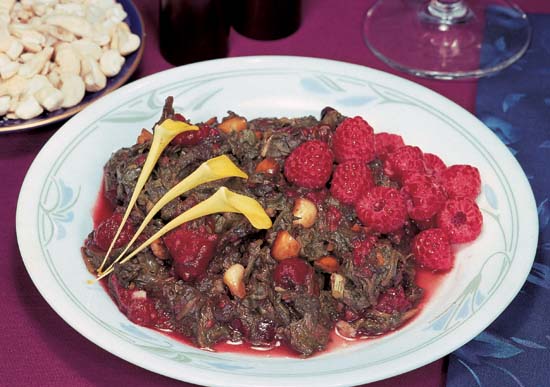
Curly Dock Greens with Raspberries and Cashews. Garnished with raspberries and columbine flower petals.