Nipplewort
A delicious green with character and an odd name
Family: Asteraceae
Species: Lapsana communis
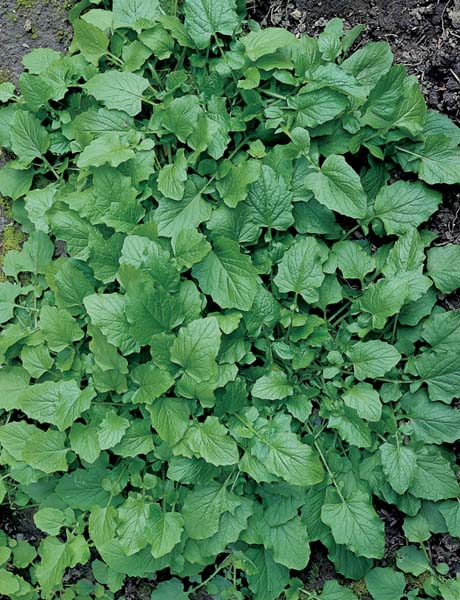
Nipplewort rosettes, just prior to bolting—a prime time to collect the leaves.
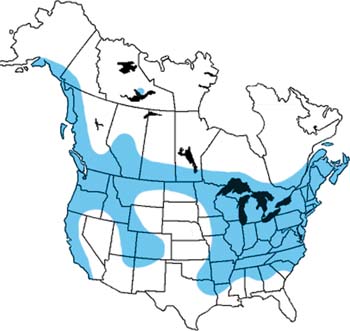
Estimated Range
Official Species Name:
-
Lapsana communis L.
Synonyms:
-
None
Common Names:
-
Nipplewort
-
Dockcress
-
Swine’s cress
An herbaceous weed naturalized from Eurasia, nipplewort is widespread and abundant in North America, primarily where humans have invaded.
Edible Parts:
-
Growing tops of leafy stems
-
Rapidly growing leaves.
-
Buds and flowers
Nipplewort originated in and grows all over eastern and western Europe, western Russia, the Mediterranean, parts of Asia, and it has naturalized in most of the populated areas of northern North America.
Most of the popular literature attributes the name “nipplewort” to the shape of the flower buds. But, as I joked about in the last chapter, that never made sense to me. Nipplewort buds were too small and not the right shape. With a little more digging, I found an explanation that seems to make more sense. According to ethnobotanical research done by David Allen and Gabrielle Hatfield and reported in their book Medicinal Plants in Folk Tradition (2004), they found the following: Historically, in the British Isles and other parts of Europe, nursing mothers would apply nipplewort leaves—possibly directly (it’s not specified) as a poultice, or in some other application—to their nipples to relieve soreness from breast feeding. In Gaelic, the original names for the plant evidently translated to “good leaf” and “breast leaf.”
“Nipplewort” makes sense from a medicinal standpoint. The word wort, which typically means “plant,” is from German and English origins and was generally applied to plants that had some medicinal value. Wort has nothing to do with “warts,” a virus-caused growth of abnormal cells.
I could find no nutrient or phytochemical data on nipplewort. It is safe to assume that nipplewort adds to the diversity of the diet with whatever nutrients it contains. Just like all the foods in this book, the value is in the diversity and the quantity of greens you eat, not in specific nutrients.
Knowing Nipplewort
Seeds: Nipplewort is an annual that grows from seed. It can germinate in any of the growing seasons when the soil is moist enough. I find it germinating much more in the cooler seasons of spring and fall than it does in the heat of summer.
Seeds need moisture and light to germinate. When buried where light cannot penetrate, nipplewort seeds will not germinate. Germination is more successful if the seeds are less than a year old and have gone through one drying period. As the seedling emerges, the cotyledons are tiny, hairless, and spoon-shaped.
Leaves: The first two true leaves are tennis-racket-shaped with three to five subtle points defining the margin. Those first two leaves remain different in shape and size from all other true leaves that follow. Close inspection shows tiny hairs on all true leaves.
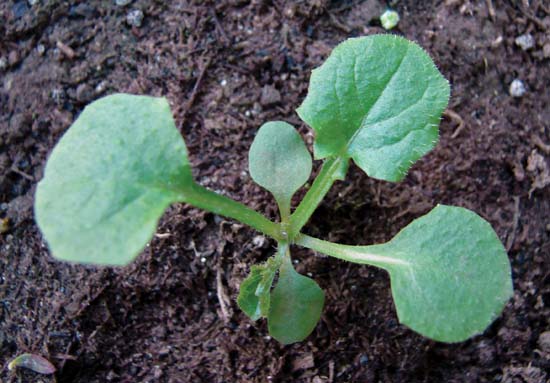
Nipplewort seedling, about an inch in size from left to right. The cotyledons are tiny and spoon-shaped. The first true leaves are on the left and right of this view. One is a rounded pentagon shape (left), and the other is a rounded three-pointed shape. From the third true leaf onward, the leaf blades get longer, the margins have more points, and lobes develop on the leaf stem, as seen on the leaf stem at upper right.
All true leaves from the third one onward gradually start taking on the adult leaf shape—a longer more pointed leaf blade, wavy leaf margins, more points on the margins, and lobes forming along the leaf stem.
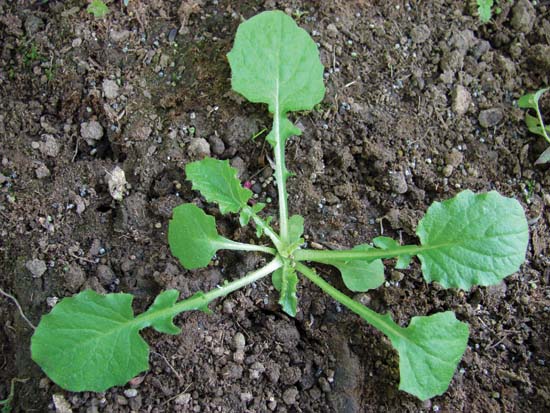
Nipplewort—still young but past the seedling stage. The tiny cotyledons are partially hidden by the overtopping true leaves. The first two true leaves pointing left and right will remain smaller and different in shape than all the other true leaves that come after them.
Nipplewort, when growing as an individual, shows a clear basal rosette of leaves. Often, due to massive amounts of seeds on the soil, the plants grow so close together that they form a loose, salad-like ground cover. Under these crowded conditions, it is impossible to see basal rosettes or where one plant stops and another begins without pulling the plants apart.
Upper leaf surfaces are covered with short tiny hairs that give a velvety feel. Individual hairs are more obvious on the leaf undersides—particularly along the veins. The main central vein has the largest hairs; secondary veins have hairs that are almost as large.
As the basal rosette of leaves develops, the leaves evolve in shape. Like sow thistle, the large blade at the tip of each leaf, while rounded, becomes more triangular with each new leaf that grows in. Just below that tip are a pair of lobes—each about one-tenth the size of the tip. Farther down the stem are even smaller lobes about a fifth or a tenth the size of the first set of lobes.
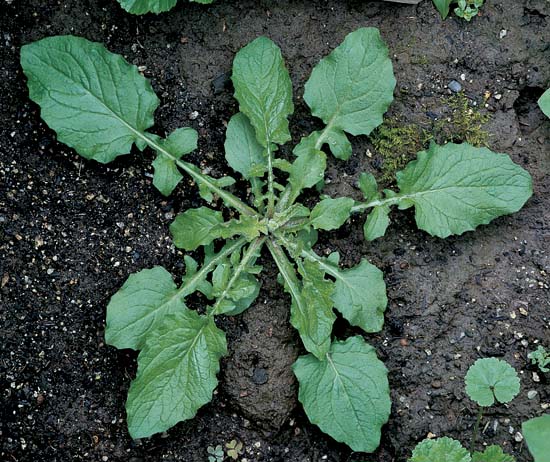
Nipplewort basal rosette of leaves. Plants like this can be anywhere from 8 to 24 inches in diameter.
The leaf stem is triangular in cross section. The very base of the leaf stem, where it attaches to the plant stem, is curved and cupped like celery.
Nipplewort leaves are green, thin, delicate, and velvety to the touch. In contrast, sow thistle leaves are bluish-green, sometimes with reddish accents, sturdy and smooth to the touch. On more mature plants, sow thistle lobes are more numerous and larger in size.
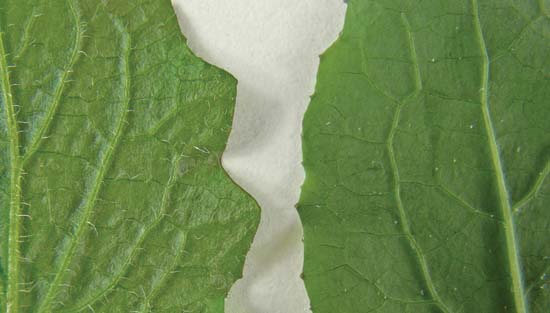
Undersides of young nipplewort leaves (left) and sow thistle compared. Nipplewort has obvious hairs on its veins with others scattered in between. Sow thistle is hairless on both its upper and lower sides.
Taproot: Like every plant in this section, nipplewort has a taproot.
Stem: At some point in the plant’s life, a flower stem emerges from the center of the basal rosette of leaves. This initiates because the plant reaches its own form of puberty and because of weather and other environmental stimuli. Seeds germinating in the spring all seem to bolt (grow a stem) at the same time. In contrast, seeds germinating in the summer or fall, tend to bolt much earlier in their lives in an effort to go to seed before inclement (bone-dry hot or freezing) weather kills them. Or if it is really late in the season, they do not bolt until they have overwintered.
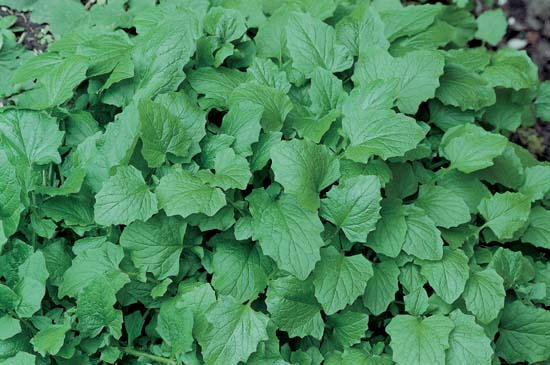
Nipplewort plants growing in high density and starting to bolt (grow a stem). The leaf tips are more triangular (less rounded) in shape as the plant continues to grow upward. The stems here, though difficult to see, are about 4 to 5 inches tall.
Stems are primarily round and hollow. If you examine the stem, you will find it covered with hairs. Upon closer examination, you will see some minor ridges running up and down the stalk. Under ideal conditions, the stem will be thick, supporting plenty of fully-formed leaves. As it branches and extends upward, the stems thin out, supporting fewer full-sized leaves.
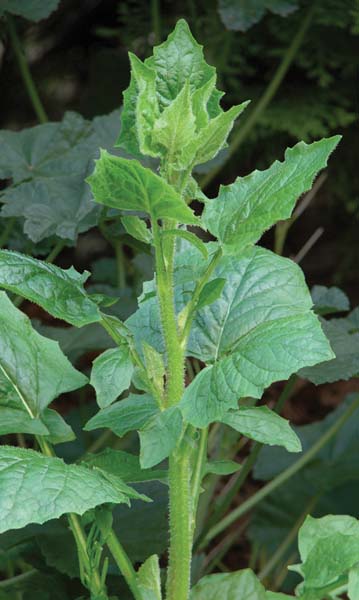
The upper 8 inches of a healthy, spring-germinated, 14-inch-tall nipplewort plant. No buds or flowers have appeared yet. The stem is thick and straight. I call it nipsparagus.
In great conditions, adult plants can reach six feet in height. The branching flowering stems narrow, increase in toughness, and increase in bitterness as the plant matures. The leaves change shape as they travel up the plant. Small narrow leaves grow on the upper branching flower stalks. The top half of the plant is almost bare of foliage relative to the bottom half.
If nipplewort stems are broken or harvested, the plant will be stimulated to produce more growth and to go quickly to seed. Cut stems often stimulate the growth of multiple replacement stems.
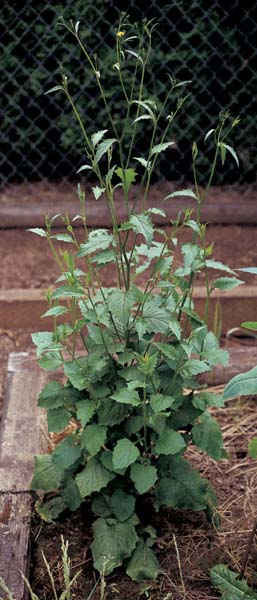
A 4-foot-tall, healthy, maturing nipplewort plant. The tall, lean reproductive stems are clearly reaching above the more leafy lower part of the plant. This plant is just forming its first buds and flowers.
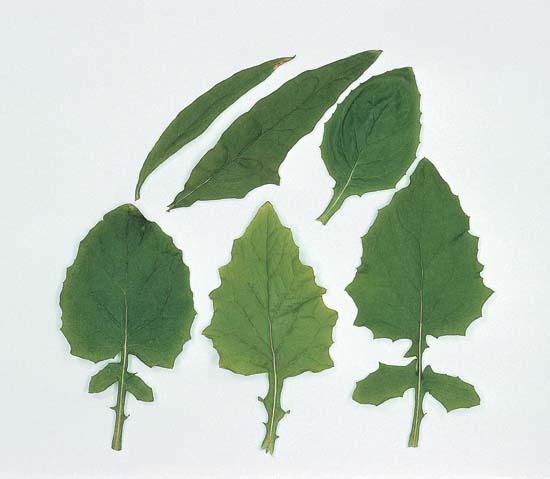
Leaf shapes found on the upper half of a fully mature nipplewort plant. The higher they are on the plant, the smaller and narrower the leaf. The bottom three leaves shown here had their stems trimmed somewhat to fit the photograph. Lower leaves nearer the base of the plant can be seen in my hand.
Buds, Bracts, Flowers: Nipplewort buds are small and green at the tips of branching stems. They are less than an eighth inch in diameter. There are eight bracts surrounding each bud. Yellow flowers emerge from the tops of the bracts. Like other members of the aster family, these are composite flowers—really a flower head of a bunch of smaller individual flowers clustered together to simulate one flower. Each petal is from a different flower and has five teeth at its tip. When fully open, nipplewort flower heads are about a half inch in diameter. The anthers carrying the pollen are somewhat brown in color.
Once pollinated, all showy flower parts fall away from the bracts, leaving the seeds to mature in their now stiff, brown bract encasement. Fully mature seeds detach from their bases and rattle around within these vase-shaped containers until they get knocked out and fall to the ground.
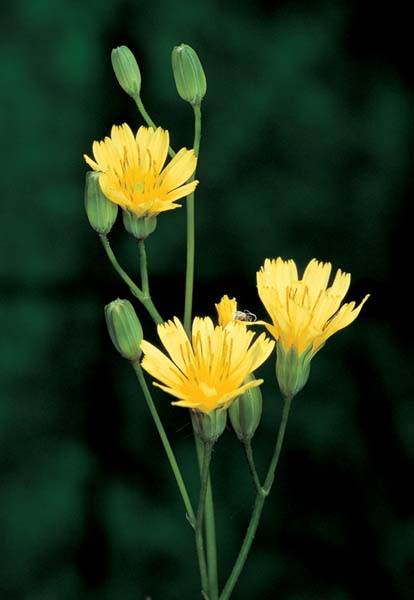
Buds and flowers of nipplewort. The flowers are mostly open here. Fully open, the petals reach out more to the sides.
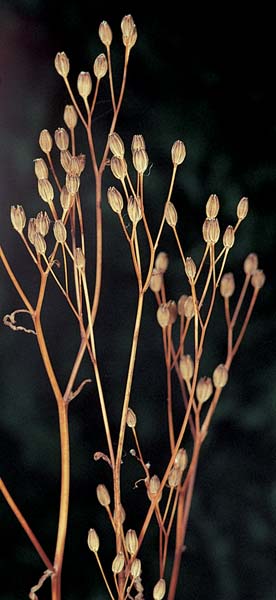
Brown dry bract encasements holding nipplewort seeds. The seeds, once mature, rattle around inside the open-topped casings until they are knocked out. The casings resemble the green buds in size and shape, but the plant has died by the time the seeds are ripe.
Harvesting and Managing Nipplewort
Leaves: Nipplewort is a prolific plant. Its seeds sprout predictably, and it produces most of its edible offerings in the spring, right around the time that asparagus shoots are being harvested. As with the other plants in this book, the goal is to gather young, rapidly growing leaves from whatever part of the plant you find them. Leaves from the basal rosette prior to stalk formation are the most tender. A leaf of any size can be good as long as it looks healthy and vibrant.
If you can find enough of this plant growing in dense clusters prior to bolting, use your scissors to clip many leaves at once. Otherwise, just using your hand to snap leaves free works fine. Just grab them at the leaf stem so you don’t injure the leaf blade. Like the other plants in this bitter plants section, nipplewort bleeds a milky sap, but it is not enough quantity to have to manage carefully.
It is helpful, however, to keep the leaves lined up as you gather them for other reasons besides sap. Nipplewort leaf stems are fibrous. As with sow thistle, you’ll want to chop off most of the leaf stem. While it may seem more efficient at the time, do not pluck the blade tips free from their stems as you gather unless you plan to use them right away. Leaving the stems on helps to keep the leaves fresh until ready for use.
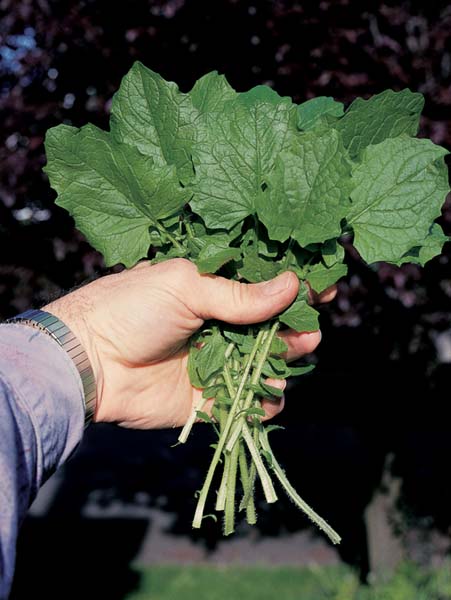
Fully mature nipplewort leaves from the lower parts of the stem. These leaves have just reached their full size—still great for use as food. Lining them up like this makes them easier to trim in the kitchen. I cut off the fibrous leaf stem where my thumb is holding the leaves.
As with all other plants, keep them cool and well hydrated until ready to use. Try to use them as close to the time you pick them as possible to preserve freshness. They will last for about a week in the refrigerator.
There are parts of North America where winters are generally mild and wet enough to support slow growth of basal rosettes. Check them out; nipplewort leaves found under those conditions can be delicious raw without more than a hint of bitterness.
Stems: Gather the upper four to eight inches of the rapidly growing stems for nipsparagus. This can be the first four to eight inches of stem from ground level all the way up to the top part of a two-foot-tall stem. The best stems are thick, tender, and straight like the one shown earlier. The length to take is determined by tenderness, which is determined by how healthy, well-watered, and rapidly growing the stem is. The thicker and straighter they are, the earlier in maturation they are. Maturing stems that are getting ready to produce buds begin to zigzag slightly from leaf to leaf. Zigzagging stems will be thinner, tougher, and more bitter. Younger, thicker, straighter is better.
Finding the tender part of the stem takes some practice. I have found that if you cut just below the point that feels tender, all that stem will be tender once boiled. Whether using a knife or scissors, there is a certain feel you will understand over time that helps you gauge tenderness in a stem. To get the maximum amount of tender stem length, cut about two inches below the point you think is tender—taking more stem then needed. Later in the kitchen, just before using, cut off a half inch more at a time, working your way up the stem, until you find an acceptable tender feel from the cut-through. Then you’ll know the stem will be good from that point upward. Snapping the stem like you would asparagus to determine the tender point can work, but it is a little difficult.
Once gathered, pull all but the very topmost baby leaves from the stem just before using. Remember that the more developed leaves will have fibrous leaf stems, so you do not want to include them when serving nipsparagus. Use the removed leaves separately. The other benefit of removing the leaves, is that the nipsparagus looks more asparagus-like, which will please anyone you serve it to.
Serving Nipplewort
Nipplewort leaves and nipsparagus can be mildly to strongly bitter depending on a variety of factors. One of the things I appreciate about nipplewort is that the bitterness there does not linger on the tongue like raw dandelion or wintercress.
The younger and more rapidly growing that nipplewort is, the less bitter; the earlier in the season, the less bitter. Sometimes young basal rosette leaves growing under mature stems can be less bitter. This is where your judgement comes into play. Taste as you gather to decide how you want to use the greens you harvest. Remember, bitterness is a feature, not a limitation. Learn to manage bitterness in meal preparation. If they are less bitter, use more in mixed dishes. If they are more bitter, use less.
Raw: I enjoy mixing them raw in vegetable, fruit, and meat salads. You want them in just enough quantity so that they add a nice bite but don’t overpower. The greens are great in sandwiches, pestos, and salsas. They are often slightly too bitter for me to eat raw or unadorned.
As you prepare dishes, keep in mind the hair factor. The short velvety hairs that cover the leaves are unnoticeable in mixed or properly cooked dishes, but they are dominant if you make a salad of nipplewort alone. Also, I find the buds, flowers, and still-tender upper elongated flower stems quite bitter. Cooking does not reduce their bitterness to any degree. To use them, chop tiny amounts into mixed dishes so they won’t overpower you. Experiment so the amount you use suits you.
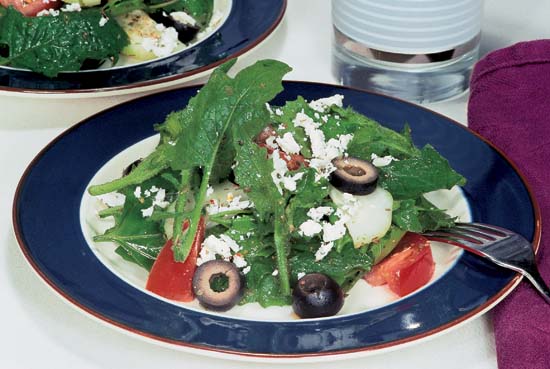
Greek Salad with Nipplewort Leaves. Also included are wild spinach leaves, cucumber slices, sliced olives, fresh tomato, and feta cheese, all drizzled with extra virgin olive oil and lemon juice, sprinkled with oregano, and salted to taste. One of my favorite salads.
Boiled: This is the best way to reduce bitterness and reveal the great underlying flavor of nipplewort greens. Boiling for two minutes leaves a very mild bitterness; around four minutes removes it all. Of course, your experience might vary. Always sample as you boil to get the taste you want. When I boil nipplewort, I enjoy eating it as a cooked green all by itself. I just add a little olive oil, balsamic vineger, and salt to taste.
Steamed: This process has almost the same bitter-reducing effect as boiling, but the hairs remain more prominent. So adjust accordingly. Steamed nipplewort greens are a great addition to an omelette.
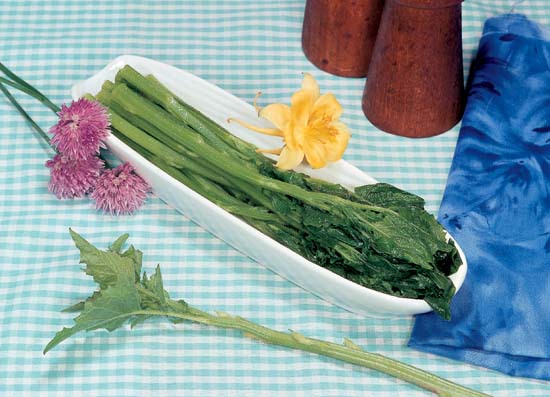
Nipsparagus. Steam or boil nipplewort stems and serve with your favorite sauce. I decorated this dish with columbine (Aquilegia chrysantha) and chive flowers. For comparison, a fresh uncooked stem is displayed on the table. Lining up stems like this take some patience because they are limp once cooked.
Sautéed: As long as the greens aren’t too bitter, sautéing works well. The extra virgin olive oil enhances the flavor quite a bit, transforming the bitterness without totally removing it. Sautéing nipplewort greens and then adding them to whipped egg for an omelette is wonderful.
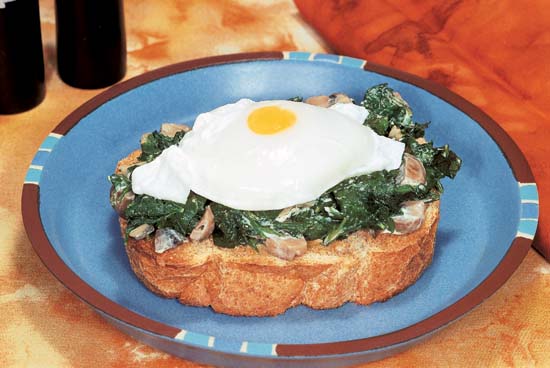
Poached Egg on Nipplewort Greens. Sauté red onions until translucent. Add the nipplewort greens and continue sautéing until the greens are fully wilted. Place the cooked greens and onions on toast and top with a poached egg. Salt and pepper to taste. Very satisfying.